
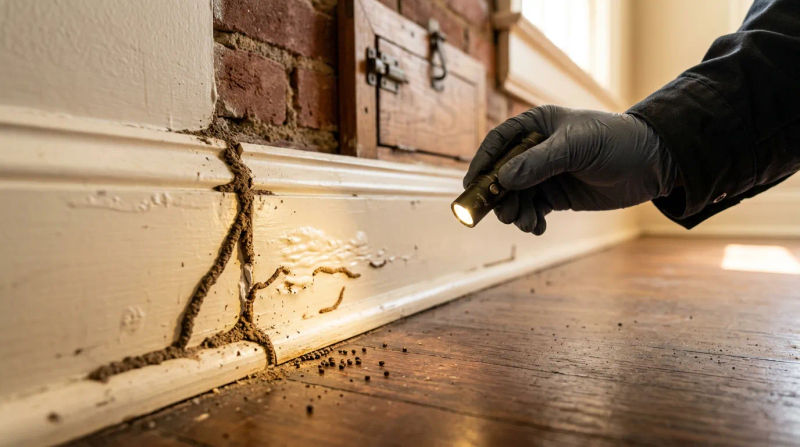
You’re tidying up the living room, and you notice it - a faint, paper-thin line running along the baseboard, almost like a wrinkle in the paint. Or maybe a door that used to close perfectly now sticks at the top, especially since the weather started to cool. It’s easy to dismiss these things as your house simply “settling.” As a pest control technician with over a decade of experience in Virginia, I can tell you that sometimes, the house isn’t just settling. It’s sending out a quiet call for help.
Here in Richmond, as we head into fall, my team and I often get calls about these kinds of small, nagging issues. Homeowners are spending more time indoors and start noticing things they overlooked during the busy summer. While many of these are harmless, some are subtle termite damage clues that point to a much larger, hidden problem. Knowing how to tell if you have termites indoors can be the difference between a simple treatment and a costly structural repair down the line.
Common Signs and Symptoms
Termites are called “silent destroyers” for a reason. They can eat away at the structure of your home for years without you ever seeing a single bug. The most obvious termite signs, like mud tubes snaking up your foundation, are well-known. But the clues inside your home are often much more discreet. Here’s a checklist of what to look for:
- Hollow-Sounding Wood: Tap on your baseboards, window frames, and door trim with the handle of a screwdriver. If an area that should be solid sounds hollow or papery, it’s a red flag. Termites eat wood from the inside out, leaving only a thin veneer of paint or wood on the surface.
- Blistered or Bubbling Paint: If you see what looks like water damage on a wall or ceiling but can’t find a leak, take a closer look. As termites tunnel just beneath the surface, they introduce moisture and damage the wood or drywall paper. This can cause paint or wallpaper to bubble, peel, or look distorted.
- Sticking Doors and Windows: Are you suddenly having trouble opening a window or closing an interior door? While high humidity can cause wood to swell, so can termites. The moisture they bring into their galleries can warp wood frames, making them difficult to operate.
- Discarded Wings: This is one of the most definitive termite signs. After a swarm (which can happen in spring or even on a warm fall day), reproductive termites shed their wings. You might find small piles of these tiny, translucent wings on windowsills, in spiderwebs in the basement, or near doorways. They look like tiny fish scales and are often the only evidence left behind after a swarm you may have missed.
- Faint Clicking Noises: This one might sound strange, but it’s real. In a very quiet house, you can sometimes hear the faint clicking or rustling sounds of termites at work. Soldier termites will bang their heads against the wood to signal danger to the colony, creating a soft, rattling sound that can sometimes be heard through the walls.
- Tiny Pinholes in Drywall: Termites will sometimes chew small “kick-out” holes in drywall or plaster to push out their feces (called frass). While Subterranean termites, the most common type in Richmond, use their frass to build their tunnels, finding tiny, inexplicable holes in a wall is cause for investigation.
- Sagging Floors or Ceilings: This is a more advanced sign, but it can start subtly. A floor that feels slightly spongy or a ceiling that has a faint dip could indicate that termites have compromised the floor joists or ceiling supports. This is particularly important to watch for in older homes.
What Causes This Problem
The culprit behind this silent destruction in our area is almost always the Eastern Subterranean Termite. These insects live in massive underground colonies that can contain hundreds of thousands of individuals. They are constantly foraging for cellulose - the organic fiber found in wood, paper, and other plant-based materials.
Your home provides the perfect food source. Termites need moisture to survive, so they build protective tunnels from the soil into your home's structure. This is a particular challenge for many Richmond homeowners. Our city is filled with beautiful, historic properties, especially in neighborhoods like the Fan and Museum Districts. These pre-1940s brick rowhouses and Colonial Revivals are built with materials termites love.
Many of these older homes have what we call “earth-filled porches” or crawlspaces with dirt floors, which provide a direct, hidden highway for termites to travel from the damp soil straight into the wooden sills and floor joists. The brick foundations, while sturdy, can develop tiny cracks over time, giving termites a concealed entry point. In rowhouses, a colony can even travel from a neighboring property through shared foundation walls, making detection even trickier.
Termites can enter through any crack as small as 1/32 of an inch. They are drawn to:
- Wood that is in direct contact with soil (like a deck post or lattice work).
- Leaky pipes, AC units, or poor drainage that keeps the soil around your foundation damp.
- Firewood stacked against the house.
- Mulch piled too high against the foundation.
Once inside, they establish a hidden network, eating 24/7 and slowly compromising the wood that holds your home together.
When to Call a Professional
After reading this, you might be tempted to grab a flashlight and start your own investigation. That’s a great first step! But if you find anything suspicious, this is where DIY efforts should stop. I've seen homeowners try store-bought sprays and baits, only to push the colony to a different, undetected part of the house. Effective termite control isn't about killing the few termites you see; it's about eliminating the entire colony, including the queen.
In my 12+ years of experience, I’ve learned that a proper diagnosis is everything. You should call for a professional inspection if:
- You see any of the signs mentioned above, even just one.
- You live in an older home, especially one with a crawlspace, and haven't had an inspection in over a year.
- Your neighbor has recently had a termite treatment.
An experienced professional has the training and specialized tools - like moisture meters and infrared cameras - to confirm termite activity and pinpoint its source without tearing your walls apart. When it comes to a termite inspection Richmond homeowners need, it’s about getting a complete picture of what’s happening behind the scenes. A qualified technician will inspect the interior, exterior, crawlspace, and attic to identify not just existing infestations but also conditions that could attract termites in the future.
Conclusion
Your home is one of your biggest investments, and protecting it starts with being proactive. Don’t dismiss that sticking door or that little bit of bubbling paint as just “old house problems.” These subtle termite damage clues are often the first and only warning you’ll get before significant damage is done. Taking a few minutes this fall to check vulnerable areas can give you valuable peace of mind or an early warning that saves you a major headache later.
Remember, termites don’t take a break. They work year-round, silently and out of sight. Acting early is the most effective way to protect your home's structure and value.
If you notice any of these signs, contact a local Pest Control professional for an inspection.