
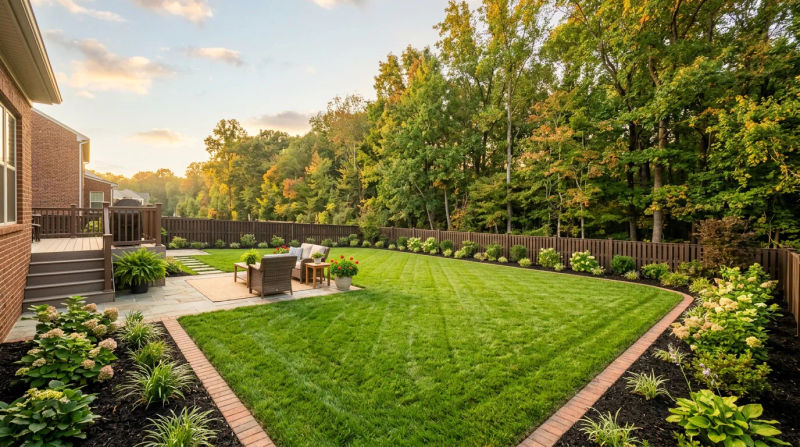
As a lead technician with Bradford Pest Control Of VA LLC, I’ve seen how quickly a beautiful Virginia yard can become a source of anxiety for a family. This was exactly the situation when I got a call from a homeowner in Spotsylvania County this past September. They lived in a beautiful, large home built in the late 1990s, set on a couple of acres that backed up to a dense patch of woods. It was the kind of property people dream of, but that dream was being overshadowed by a constant worry: ticks.
The clients had two young children and a golden retriever who loved spending time outdoors, especially during the crisp, pleasant days of early fall. But every time the dog came inside, it was a frantic search for ticks. Every time the kids ran in from the playset near the woodline, their parents were checking their clothes and hair. They told me they felt like they were losing their own backyard. They knew winter was coming, but they also knew that ticks in our area remain active well into the fall. Their call to us at Bradford Pest Control Of VA LLC was proactive; they wanted to reclaim their yard before the autumn leaf drop made the problem even harder to manage.
The Assessment
When I arrived at their Spotsylvania property, the scene was familiar. The house was a gorgeous neo-eclectic style, common for that era of building, with a well-manicured lawn that abruptly met a thick, natural woodline. This sharp transition is what we in the pest control industry call an "edge habitat," and it's a superhighway for ticks.
My first step is always a thorough inspection. This isn't just a quick walk-around; it's a data-gathering mission. I started by using a tick drag - a simple but incredibly effective tool made of white flannel cloth that I drag across vegetation. As I moved along the perimeter of their yard, the results were immediate and concerning. In just a 50-foot stretch along the woods, I collected over a dozen ticks, the majority of which were Ixodes scapularis, better known as deer ticks or blacklegged ticks. These are the primary vectors for Lyme disease in Virginia, so their presence immediately raises the stakes.
I identified several key problem areas:
- The Woodline: This was the epicenter. Deer, which are a major host for ticks, were clearly using the woods as a travel corridor. The high grass and shaded, moist environment were perfect for ticks waiting for a host.
- Leaf Litter Piles: Even though it was only September, early leaf drop had already created small piles under trees and along a fence line. I explained to the homeowner that this is a critical part of the leaf litter tick habitat control puzzle. Each pile of damp leaves is a five-star hotel for ticks, protecting them from the sun and dehydration.
- Under the Deck: The low-clearance space under their elevated deck was shady, damp, and collected debris. It was another prime harborage area, especially for ticks dropped by squirrels, chipmunks, or other small mammals.
- The Playset Area: Their children's playset was located just 15 feet from the woods. While it sat on the maintained lawn, its proximity to the high-risk zone meant ticks could easily be transferred onto the equipment or into the play area.
This inspection confirmed the family's fears and gave me the data I needed to build a targeted and effective yard tick treatment Spotsylvania plan. It wasn't just about spraying; it was about understanding the property's unique ecology and pressure points.
Our Solution
Armed with the findings from my assessment, I sat down with the homeowners to outline the Bradford Pest Control Of VA LLC plan of action. My goal is never just to treat the symptom; it's to provide a comprehensive solution that delivers both immediate relief and long-term reduction. This deer tick reduction plan had two main components: professional treatment and habitat modification.
First, we focused on immediate knockdown. My team and I used professional-grade backpack misters to apply a targeted acaricide. The mister is essential because it generates a fine cloud that can penetrate dense foliage, coat the undersides of leaves, and settle into the leaf litter where ticks are hiding. We focused our application on the high-risk zones I’d identified: the first 20-25 feet of the woodline perimeter, the brushy areas, under the deck, and around the base of the playset. We at Bradford Pest Control Of VA LLC take our responsibility to the environment seriously, so we use products strategically and according to strict protocols to minimize impact on beneficial insects like pollinators.
Second, and just as important, was empowering the homeowners with knowledge. A one-time treatment is just a band-aid if the underlying environmental conditions aren't addressed. I provided them with a simple, actionable list for habitat modification:
- Create a Barrier: I recommended they install a three-foot-wide barrier of wood chips or gravel between the lawn and the wooded edge. Ticks don't like crossing hot, dry surfaces, and this simple feature creates a