

It’s a beautiful, crisp fall day here in Fredericksburg. The sun is shining, but there’s a definite chill in the air, a sign that winter isn’t far off. You head upstairs to an unused bedroom or your home office and notice something odd. On the windowpane, warmed by the afternoon sun, are a dozen or so large, slow-moving flies. They seem sluggish and clumsy, not like the frantic houseflies of summer. You might swat them or vacuum them up and not think much of it, but as a pest control technician with over a decade of experience in this area, I can tell you that this is often the first, subtle clue of a much larger problem brewing in your walls and attic.
These aren't ordinary houseflies; they're likely cluster flies. And their presence inside your home means they’ve already found a way in to ride out the winter. What you’re seeing is just the tip of the iceberg.
Common Signs and Symptoms
One of the most common calls my team and I get in September and October is about these sluggish flies. Homeowners are often puzzled because their house is clean, so they can't figure out where the flies are coming from. The key is understanding that these flies aren't seeking food or filth; they are seeking shelter. Here are the key cluster flies in attic signs and other indicators of an impending infestation:
- Swarms on Sunny Exteriors: Before they even get inside, you might notice large groups of flies “clustering” on the sunny, warm sides of your house, typically the south or west-facing walls, in the late afternoon. This is them scouting for entry points.
- The Window Sill Graveyard: This is the classic sign. You find numerous dead or dying flies on window sills, floors, and inside light fixtures, particularly in upper-story rooms or attics. Because they are attracted to light and warmth, they emerge from wall voids and head for the nearest window, where they eventually get trapped and die.
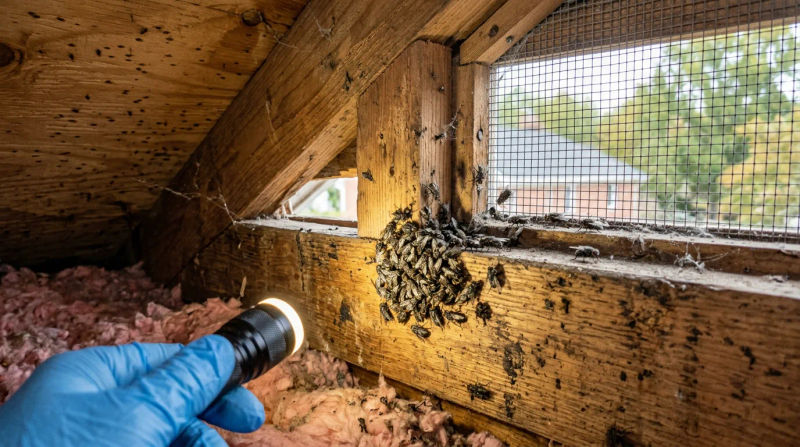
- Activity in Unfinished Spaces: If you venture into your attic on a mild fall day, you might see them firsthand. Look for live flies crawling lazily on the rafters or insulation. You may also find piles of dead flies in the corners or around attic windows. Sometimes, a significant cluster fly infestation can create a faint, audible buzzing sound in the attic or wall voids.
- Sudden Indoor Appearances: You’ll think you’ve handled the problem, but then a warm, sunny day arrives in November or even February. Suddenly, a new wave of flies appears inside. This happens because the warmth tricks them into thinking it’s spring, and they emerge from their hiding spots within the walls, becoming active inside your living space.
- Small, Dark Stains: When hundreds or thousands of flies are overwintering in a void, their excrement can create small, dark-colored spots on walls or ceilings. This is often subtle and can be mistaken for simple specks of dirt, but a pattern of them near a ceiling corner or window frame is a red flag.
- A Distinctive Odor: A large, established infestation can produce a faint, sickly-sweet smell, sometimes described as being similar to buckwheat honey. This odor comes from the flies themselves and their droppings. If you notice an unusual smell in an upstairs room or attic, it’s worth investigating.
- Emerging from Cracks and Crevices: You might see flies crawling out from behind baseboards, around window and door trim, or even from behind electrical outlet covers and recessed lighting fixtures. This is definitive proof they are living within your home’s structure.
What Causes This Problem
Understanding why cluster flies come inside in fall is the first step to preventing them. Unlike houseflies, which breed in garbage and manure, cluster flies have a completely different life cycle. They are parasitic on earthworms. In the summer, they live outdoors and lay their eggs in the soil. The larvae then find and feed on earthworms.
As the days shorten and Fredericksburg’s overnight temperatures begin to dip, a biological trigger tells the adult flies it's time to find a safe place to hibernate, a state called diapause. They are looking for a protected, undisturbed space to wait out the winter. Your home’s wall voids, soffits, and attic are the perfect five-star resort for them.
They are drawn to the heat radiating from your home and seek out tiny entry points to get inside. Common cluster fly entry points around siding and other areas include:
- Gaps Around Windows and Doors: Even small, unsealed gaps in the framing or casing can be an open invitation.
- Soffit and Eave Vents: The vents designed to let your attic breathe are often a primary highway for pests.
- Weep Holes in Brick: The small drainage holes at the base of brick walls are a common entry point.
- Where Utilities Enter: Gaps around pipes, electrical conduits, and HVAC lines.
- Under the Edge of Siding: Especially where it meets the foundation or trim.
Many homes in our area, particularly those built in the 1990s and 2000s, feature complex rooflines with multiple gables and dormers. These architectural styles, while visually appealing, create an abundance of seams, corners, and junctions between materials like siding, stone veneer, and trim. Each of these junctions is a potential cluster fly entry point around siding that can be difficult for a homeowner to spot and seal.
When to Call a Professional
So, you've confirmed you have cluster flies. What now? The right approach depends on the scale of the problem.
If you’re only seeing a handful of flies - maybe five to ten - you can likely manage them yourself by vacuuming them up. This is the most effective way to remove them from your living space without crushing them (which can release that unpleasant odor). You can also do a walk-around of your property and use caulk to seal any small, obvious cracks you find around window frames or utility entry points.
However, I strongly advise against using over-the-counter “bug bombs” or foggers in your attic. While it seems like a quick fix, it’s largely ineffective for a cluster fly infestation. These products rarely penetrate the wall voids and hidden crevices where the majority of the flies are hiding. Furthermore, the dead flies can attract secondary pests like larder beetles and carpet beetles, creating a new problem.
It’s time to call an experienced professional when:
- You are seeing dozens or hundreds of flies daily.
- The problem is recurring year after year.
- You cannot locate or safely access the entry points on your home's exterior.
- You see signs of a very large population in the attic or wall voids.
An experienced pest control professional can address a cluster fly issue comprehensively. The most effective strategy involves an exterior treatment applied in the late summer or early fall, before the flies begin entering the structure. This treatment creates a protective barrier that stops them from getting in. For existing infestations, professionals have specialized equipment to apply dusts and other materials directly into the voids where flies are overwintering, treating the source of the problem, not just the symptoms.
Conclusion
Seeing those slow-moving flies on your windows in the fall is more than a minor annoyance; it’s a warning sign. Cluster flies are not a reflection of your home's cleanliness, but a simple matter of biology and opportunity. They are seeking shelter from the coming cold, and your home provides the perfect refuge.
The key takeaways are to pay attention to the early signs, understand that the problem originates from the outside, and recognize that the most effective control happens before they establish themselves in your walls and attic. Sealing entry points is a great long-term strategy, but for an active or recurring cluster fly infestation, a targeted professional treatment is the most reliable solution.
If you notice any of these signs, contact a local pest control professional for an inspection. Acting early can prevent months of frustration and ensure your home remains a pest-free sanctuary through the winter.