
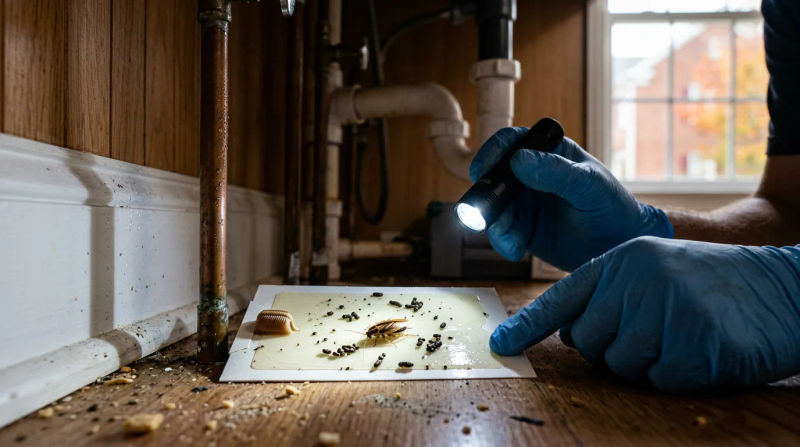
It’s a classic Fredericksburg scene: you head to the kitchen for a late-night glass of water, flip on the light, and catch a flash of movement. Something dark and fast scurries under the dishwasher. Your heart sinks. Was that a roach? As a pest control technician who has worked in local homes for over 12 years, I can tell you that this experience becomes far more common as we head into autumn. That first crisp evening is a signal for many pests, especially cockroaches, to find a warmer place to spend the winter. Unfortunately, your home is the perfect destination.
Seeing one roach is unsettling, but it’s often just the tip of the iceberg. Understanding the other, more subtle clues they leave behind is crucial for catching a problem before it becomes a full-blown infestation. Let’s walk through the key things my team and I look for when we get a call about a suspected roach issue.
Common Signs and Symptoms
Roaches are experts at staying hidden, so you’re more likely to find the evidence they leave behind than to see them marching across your floor. Knowing these roach infestation signs is your first line of defense.
- Live Roach Sightings: This is the most obvious sign. Because roaches are nocturnal, seeing one during the day is a major red flag. It often indicates that their hiding spots are so overcrowded that they are being forced out in search of food and water, even when they feel more vulnerable.
- Roach Droppings: This is one of the most common pieces of evidence we find. Homeowners often ask me about roach droppings vs pepper flakes or coffee grounds, and it’s a great question. For smaller species like the German cockroach, their droppings look exactly like coarse black pepper or coffee grounds. You'll typically find this scattered inside cabinets, on countertops, in drawers, or behind appliances. For larger species like the American cockroach, the droppings are cylindrical with blunt ends and ridges on the sides. They are often mistaken for mouse droppings, but roach droppings lack the pointed ends of rodent feces.
- Egg Casings (Oothecae): Finding an ootheca is definitive proof of a breeding population. These are small, brown, oblong casings that hold multiple eggs. A single German cockroach ootheca can contain up to 48 eggs. You’ll find them tucked away in dark, protected areas: glued to the underside of furniture, in the corners of drawers, behind picture frames, or in the tight spaces between appliances and walls.
- A Distinct, Unpleasant Odor: A large, established roach infestation produces a noticeable smell. It’s often described as musty, oily, and slightly sweet. This odor comes from a combination of their feces, aggregation pheromones (chemicals they use to communicate and gather), and the decomposition of dead roaches. If you notice a persistent, strange smell in your kitchen or bathroom that you can't trace, it’s worth investigating further.
- Smear Marks: In areas with high moisture and a large roach population, you might see dark, irregular-shaped smear marks. These are created as roaches crawl over surfaces, dragging their filth-covered bodies along. Look for these on walls, along baseboards, and in the corners of cabinets, especially under sinks.
- Shed Skins: As juvenile roaches (nymphs) grow, they molt and shed their exoskeleton multiple times. You may find these shed skins, which look like translucent, empty roaches, near their harborage areas. Finding skins of various sizes indicates that nymphs are successfully maturing into adults.
- Damage to Property: Roaches are omnivores and will eat almost anything. While they prefer food scraps, they will also consume paper, cardboard, glue from book bindings, and even wallpaper paste. Unexplained chew marks on food packaging or damage to paper goods can be a subtle sign of their presence.
What Causes This Problem
Understanding why roaches come inside in fall is key to preventing them. It almost always comes down to three things: warmth, water, and food. As the temperatures drop, the conditions outdoors become less hospitable, driving them to seek refuge indoors.
The increase in September roach activity in Virginia is a predictable annual event. The cooler nights push them from their outdoor shelters - like woodpiles, mulch beds, and sewers - toward the consistent warmth radiating from our homes. They are masters at finding entry points.
Many homes in the Fredericksburg area, particularly the large, custom homes built from the 1990s onward on wooded lots, offer countless opportunities for entry. With their complex, multi-gabled rooflines and mixed exteriors of brick, stone, and siding, there are numerous small gaps and crevices. My team and I frequently find roaches gaining access through:
- Gaps around utility penetrations: Where pipes, wires, and vents enter the home.
- Cracks in the foundation: Even a tiny crack is a welcome mat for a roach.
- Poorly sealed windows and doors: Worn weather stripping creates an easy path inside.
- Underneath garage doors: The seals at the bottom of two- and three-car garages often have gaps at the corners.
- Vents: Unscreened attic or crawl space vents are open invitations.
Once inside, they stay if they find what they need. A few crumbs under the toaster, a slow drip from the faucet under the sink, or a damp basement provides everything they need to survive and thrive. Clutter, like stacks of cardboard boxes or old newspapers, gives them the perfect, undisturbed places to hide and breed.
When to Call a Professional
Many homeowners first try to solve a roach problem on their own. Store-bought baits and sprays can seem like a quick fix, and they might eliminate a few roaches you see. However, these methods rarely address the root of the problem. They don't penetrate the hidden voids where the majority of the population and their egg casings are located. In some cases, over-the-counter sprays can even cause a roach population to scatter, making the problem spread to other areas of your home.
You should consider calling for professional help if you notice these signs:
- You see roaches during the day.
- You've found evidence (droppings, egg cases) in multiple rooms.
- The problem continues or gets worse despite your cleaning and DIY treatments.
- Someone in your household suffers from allergies or asthma. Roach allergens are a common indoor trigger that can cause significant health issues.
When you bring in an experienced professional, the approach is completely different. We start with a thorough inspection to identify the specific type of roach, locate their hiding spots and entry points, and assess the extent of the infestation. From there, we develop a targeted strategy that may include baits, insect growth regulators, and void treatments that reach the places DIY products can't. The goal isn't just to kill the roaches you see, but to eliminate the entire colony and put measures in place to prevent them from coming back.
Conclusion
As the leaves begin to turn and the air gets cooler here in Fredericksburg, remember that pests are looking for a warm place to stay. Roaches are more than just a nuisance; they are a health hazard, capable of spreading bacteria and triggering allergies. Being vigilant and knowing the common roach infestation signs - from droppings that look like pepper flakes to musty odors - is your best tool for early detection.
Don't underestimate a roach sighting. A single roach often signals a much larger group hiding just out of sight. Acting early can save you from a much bigger headache down the road.
If you notice any of these signs, contact a local Pest Control professional for an inspection.